Twenty-Three Hours in a Box: The Data Behind America's Isolation Cells and the States Dismantling Them
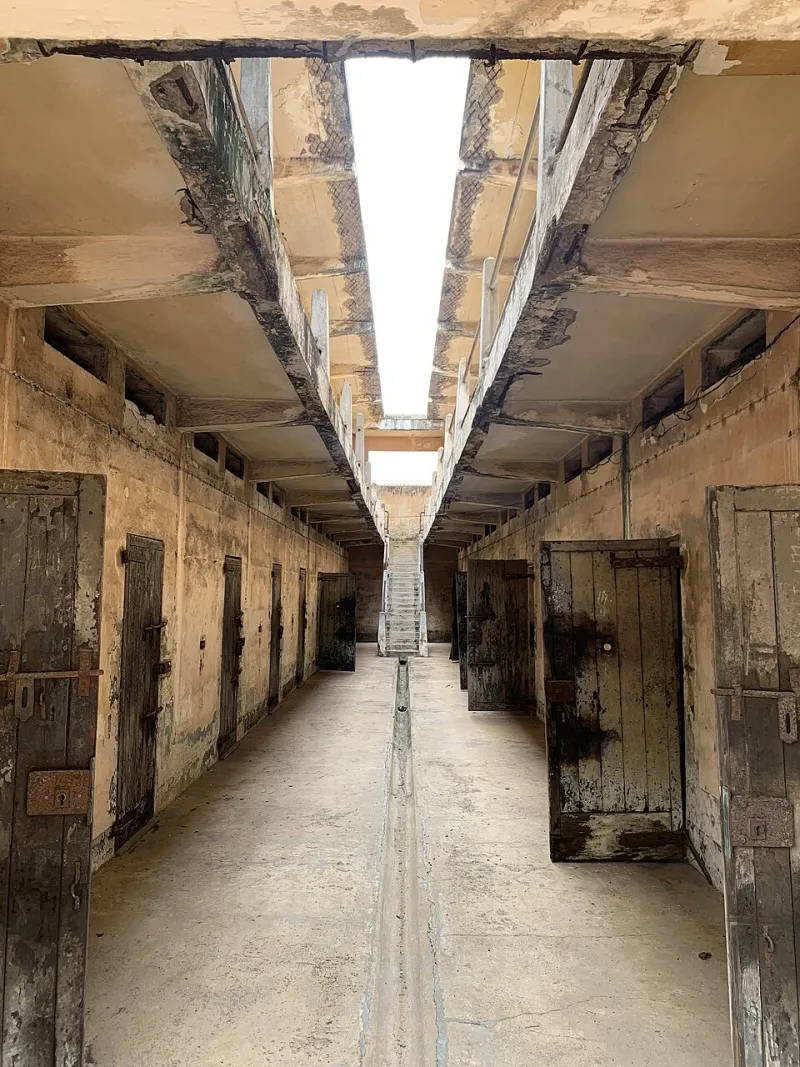
Photo: Bambiwa, CC BY 4.0, via Wikimedia Commons
There is a number that should haunt every American who pays taxes to a corrections department: 23. That is the count of hours, on an average day, that a person in solitary confinement spends inside a cell roughly the size of a parking space. One hour — sometimes less — is allotted for movement, a shower, perhaps a walled yard alone. The other 23 belong to the box.
For decades, corrections officials defended this practice as a necessary tool for managing the so-called worst of the worst. The data now tells a different story, and it is a story that a growing bipartisan coalition of lawmakers, judges, and even former wardens have begun to act on.
What the Research Actually Shows
The psychological literature on isolation is among the most consistent in all of social science. Studies going back to the nineteenth century — when prison reformers first documented the breakdown of inmates held in Pennsylvania-style isolation — describe a predictable cascade: anxiety and hypersensitivity within days, followed by paranoia, hallucinations, self-harm, and in the most severe cases, complete psychiatric decompensation.
Modern research has sharpened the picture. A landmark analysis of data from the Washington State Department of Corrections found that people released directly from solitary to the street reoffended at significantly higher rates than comparable prisoners released from the general population. Other studies have linked even brief stints in isolation to elevated post-release mortality, including suicide. Craig Haney, the University of California psychologist who has testified in countless solitary litigation cases, has described the cell not as a housing assignment but as an "artificial environment" engineered to produce suffering.
The scale of the practice remains staggering. Advocacy groups using state records estimate that somewhere between 55,000 and 80,000 people are in restrictive housing on any given day in the United States, with tens of thousands more held in jails, juvenile facilities, and immigration detention under similar conditions. No other democracy comes close.
The States That Walked Away
Here is where the story turns. Because if solitary were an unavoidable fact of prison life, the reform movement would face an impossible argument. It is not — and several states have proven it.
Maine was the first to lead. Beginning in 2011, Corrections Commissioner Joseph Ponte, working with reform-minded staff, cut the state's solitary population by more than half while seeing violence inside its facilities decline. The method was unglamorous: better staff training, de-escalation incentives, and a hard requirement that people be released from isolation to a program or the general population rather than straight to the street.
Colorado went further. Under Director Rick Raemisch — a former sheriff, notably not a soft-on-crime activist — the state announced it would no longer hold anyone in long-term solitary, ending the practice of keeping prisoners in isolation for months or years at a stretch. Raemisch famously spent a night in a solitary cell himself and wrote afterward that he could not imagine subjecting anyone to it for the years that had once been routine.
North Dakota borrowed from Norway's model, redesigning its restrictive housing around human contact and gradual reintegration. New Jersey, New York, and Nebraska have all passed statutory limits, capping the duration of isolation and excluding young people, elderly prisoners, and those with serious mental illness. Each state arrived by a different route, but all landed on the same conclusion: the sky did not fall.
Where the Momentum Goes Next
Legislative trackers maintained by reform coalitions show dozens of solitary restriction bills introduced in statehouses across the country, including in conservative states such as Utah, Georgia, and Ohio. The federal picture is moving too, with repeated congressional attempts to adopt national standards through the Solitary Confinement Reform Act.
What makes this fight unusual in a polarized era is the breadth of the coalition behind it. Fiscal conservatives recoil at the price tag — isolation units cost tens of thousands of dollars more per person per year than general population housing. Evangelical and faith communities object to what they see as state-sanctioned psychological torture. Libertarians see due process violations; civil rights organizations see the racial disparities, since Black and Latino prisoners are placed in solitary at rates well beyond their share of prison populations. The movement's ranks include survivors of the box itself, whose testimony has proven more persuasive than any study.
That is the lesson for advocates reading this site: the argument against solitary no longer requires anyone to accept a progressive framing. The numbers, the costs, and the outcomes make the case on their own. Twenty-three hours in a box is not a policy. It is a choice — and more states are choosing, at last, to open the door.