Seventy Years Old and Still Counting: Why America's Oldest Prisoners Are the Reform Movement's Best Argument
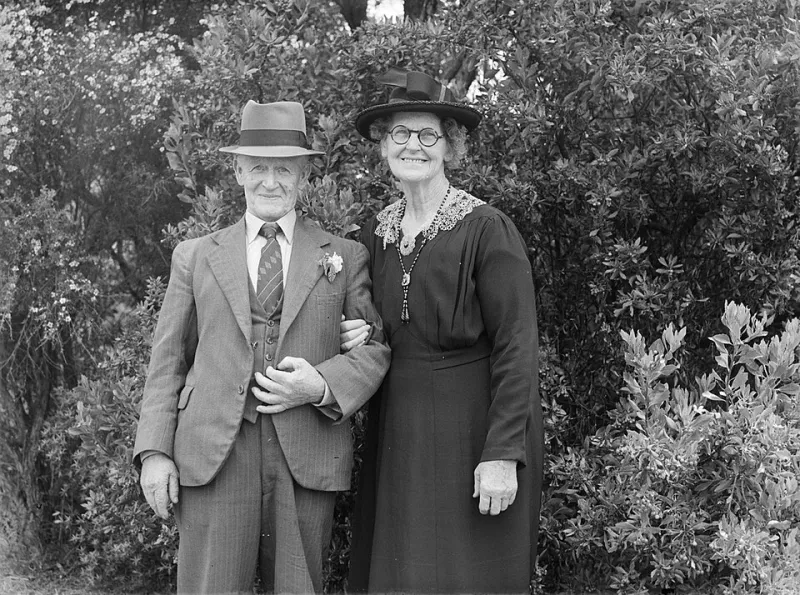
Photo: Collins, Tudor Washington, 1898-1970, photographer, CC BY 4.0, via Wikimedia Commons
The fastest-growing demographic in American prisons is not who you think. It is not gang recruits or first-time offenders. It is people old enough to collect Medicare — and in many cases, old enough to need it. Between 2000 and 2020, the population of incarcerated Americans aged 55 and older grew by more than 240 percent, according to corrections data compiled by academic researchers. Today, tens of thousands of people behind bars are over 65, and the cost of housing each one can exceed $100,000 a year once medical care is counted.
Here is the uncomfortable arithmetic for defenders of the status quo: study after study, including the Sentencing Project's foundational work on age and crime, confirms what gerontologists have long known — criminal behavior collapses with age. Recidivism rates for people released in their sixties and seventies hover in the single digits. These are, by any risk-based measure, the safest people in the system. They are also, by any fiscal measure, the most expensive.
What Geriatric Care Behind Bars Looks Like
Ask anyone who has worked a prison medical unit. A nurse who spent a decade in a Southern state's geriatric wing described to us a facility retrofitted with hospital beds, oxygen concentrators, and lifts for patients who could no longer walk to meals. 'We were running a nursing home with chain-link fences,' she said. 'Half my patients had dementia. The question nobody could answer was: what is the public protected from?'
That question echoes through every aging facility in the country. Dementia units inside prison walls. Hospice programs where incarcerated volunteers care for the dying. Dialysis transported under guard. Every one of these is a budget line item that buys the public no additional safety whatsoever.
Families in the Waiting Room
For relatives, the machinery of release is often more punishing than the sentence itself. Consider the experience of families navigating 'second look' statutes — laws allowing courts to revisit decades-old sentences. In states that have them, the process can involve years of paperwork, hearings scheduled and rescheduled, and medical evaluations conducted by the very corrections departments whose budgets depend on continued incarceration.
Deborah, whose father is serving a sentence imposed in 1988, described the experience as 'applying for a mercy that was supposed to be built into the law.' Her father, now 71, has a documented heart condition and a clean disciplinary record spanning two decades. His petition is pending. His siblings from that era have begun, in her words, 'planning funerals around hearings.'
The States That Moved
The good news is that the logjam is cracking. Delaware expanded its compassionate release framework to allow courts to consider medical frailty and age more broadly, shortening the waiting periods that once made petitions meaningless. Louisiana — the state with the nation's highest incarceration rate for much of the past three decades — passed legislation easing medical parole and parole eligibility for elderly prisoners, a shift driven partly by fiscal conservatives confronting the cost curve.
Other states are following with variations: California's elder parole hearings for those over 50, New York's Medical Parole provisions, Mississippi's recent moves on geriatric parole. Each law is imperfect. Each, nonetheless, represents a crack in the assumption that a sentence must outlast the person who received it.
The Political Puzzle
If the policy case is this lopsided — maximal cost, minimal risk, universal aging — why has reform stalled? The answer is the same one that has shaped criminal justice politics for fifty years: fear of the Willie Horton ad. Legislators who cannot lose an election on prison spending can lose one on a single release gone wrong. The result is a system that optimizes for political safety rather than public safety.
But the coalition is shifting. Conservative states with thin budgets are discovering that geriatric prison wings compete with schools and hospitals for dollars. Progressive advocates are reframing the issue around dignity and the racial arithmetic of accumulated sentence enhancements — the Black defendant sentenced in 1992 whose enhancements were never reviewed, now 70, now dying behind glass.
The Winning Battleground
This is why elderly release is the movement's next front. It does not require the public to rethink punishment in the abstract — only to answer one concrete question: what do we gain by keeping a 74-year-old with congestive heart failure in a cage for five more years at $120,000 apiece? The honest answer is nothing. The political answer, increasingly, is that we cannot afford to say nothing.
The generation of the tough-on-crime era is aging inside. So is the will to keep them there. The states that have moved — Delaware, Louisiana, and a growing list — show that when the fiscal and moral cases align, even the most carceral legislatures bend. The rest should take note: mercy delayed is money burned, and the invoice comes due every single year.