The Credible Messenger Movement: Seven Voices Changing the Laws That Caged Them
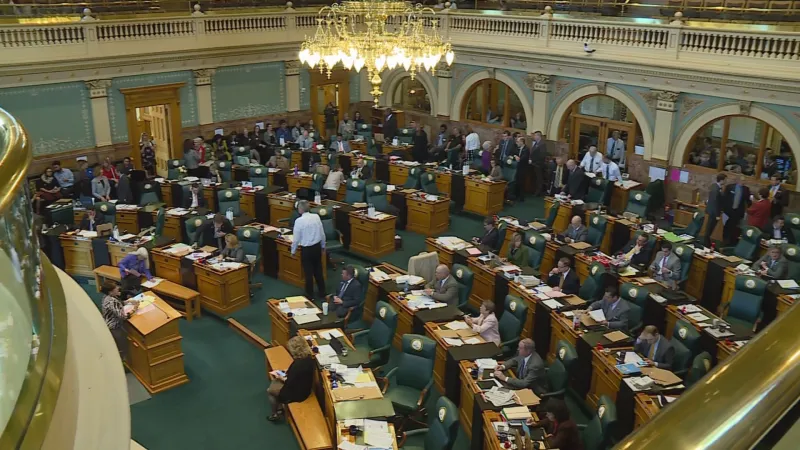
Photo: diverse group advocates speaking at state capitol legislative hearing, via content.9news.com
For most of American history, the people most affected by criminal law were its objects, never its authors. That is changing. A generation of formerly incarcerated advocates has moved from prison cells to committee hearings, drafting and passing legislation in statehouses from coast to coast. Their credibility is not incidental to their effectiveness — it is the engine of it. Lawmakers who might dismiss a policy paper will listen to a person who can describe what a solitary confinement cell sounds like at 3 a.m.
These seven leaders illustrate why the movement calls them "credible messengers."
1. Daryl Atkinson — From Felony Conviction to MacArthur Fellowship
After serving 40 months in Alabama for a first, nonviolent drug offense, Daryl Atkinson rebuilt his life, earned a law degree, and co-founded Forward Justice, a North Carolina-based policy organization. He helped lead the push for "second chance" employment reforms across the South, including North Carolina's clean slate-style expungement expansion, and became the first formerly incarcerated person to receive the Roderick MacArthur Justice Prize. His message: collateral consequences, not just sentences, are the machinery of the New Jim Crow.
2. Susan Burton — Reentry as Legislation
Burton spent years cycling through California's prison system before founding A New Way of Life Reentry Project in Los Angeles, which has housed thousands of women returning from incarceration. Her advocacy helped shape California's approach to reentry services and Ban the Box employment policies, and her memoir, Becoming Ms. Burton, became a required text in reform circles nationwide.
3. Glenn E. Martin — Putting the Industry on Trial
Founder of JustLeadershipUSA (JLUSA), Martin — who served six years in federal prison — built the organization around the principle that those closest to the problem are closest to the solution. JLUSA's campaigns contributed to the closure of Rikers Island's plan in New York City and to the rise of #FreeNewYork reforms, while Martin's national advocacy has pressured corporations and governments alike on hiring discrimination.
4. Tarra Simmons — From Prison to the Statehouse
Simmons was denied the chance to sit for the Washington State bar exam because of her criminal record; she fought that exclusion all the way to the state Supreme Court and won. Then she went further, winning election to the Washington House of Representatives in 2020 — making her one of the first formerly incarcerated people to serve in a state legislature. She has since sponsored bills expanding access to record-sealing and reentry support, proving that lived experience can translate directly into statute.
5. Desmond Meade — The Architect of Amendment 4
After returning home to Florida, Meade led the Florida Rights Restoration Coalition in a campaign that culminated in Amendment 4 — the 2018 ballot measure that restored voting rights to an estimated 1.4 million returning citizens, the largest enfranchisement event in modern American history. He did it with a coalition anchored by returning citizens themselves, and he continues the fight against legislative rollbacks.
6. Ronald Simpson-Bey — Reforming Solitary, Inside and Out
A Michigan native who spent decades in state prison — much of it in segregation — for a conviction he maintains was unjust, Simpson-Bey emerged as a leading voice on solitary confinement. As a leader with JustLeadershipUSA and the Alliance for Safety and Justice, he has advised on restrictive housing reform and championed measures that limit the use of isolation, insisting that policy written without the input of those who endured it will always fall short.
7. Chesa Boudin and the Reentry Pipeline — A Note on the Next Generation
Not every credible messenger holds office; many are building the pipeline. Leaders like Vivian Nixon (College & Community Fellowship) and the formerly incarcerated policy staff now embedded in groups like The Sentencing Project and the ACLU's Campaign for Smart Justice are ensuring the next generation of reform is staffed, from the drafting table to the governor's desk, by people who lived the consequences.
Why Lived Experience Wins
The pattern across these stories is unmistakable. When a bill's sponsor can testify from personal knowledge, the political calculus shifts. Opponents' scare rhetoric collides with a living witness. Data gains a face; statistics gain a voice.
The movement's slogan — "nothing about us without us" — is more than a demand for inclusion. It is a theory of change, and the results are on the books.