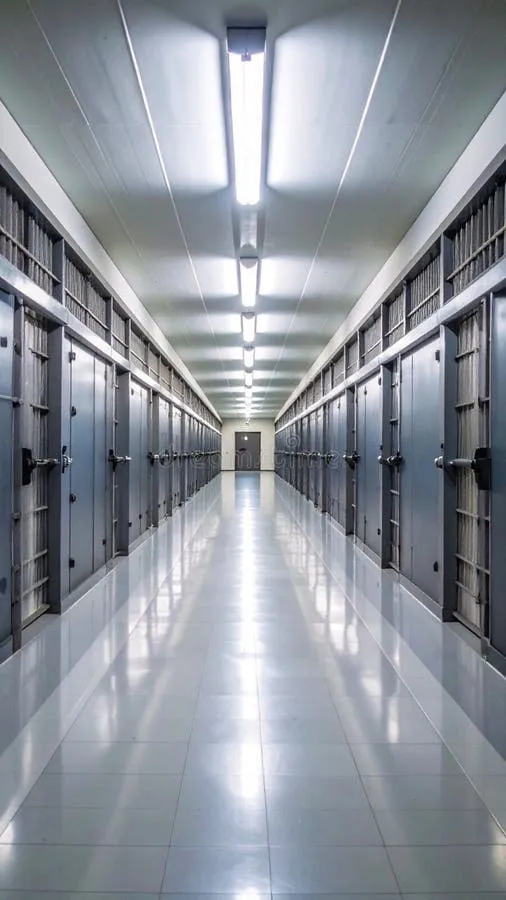
When the Prison Is the Biggest Employer: Rethinking the Rural Economy Built Around Cages

Photo: USDAgov, Public domain, via Wikimedia Commons
Drive through small-town America in states like New York, California, or Texas, and you will pass through communities where the largest employer is not a factory or a hospital but a state prison. Corrections officers, administrative staff, maintenance crews, food service — a single facility can support several hundred families and anchor the tax base of a county with no other industry to speak of. Economists call this the "prison economy." The people who live in it call it home.
Any honest conversation about ending mass incarceration has to include these places, because prison closures are political events, and prison towns are where those politics get decided. If reformers show up only with a moral argument and no economic plan, they lose. The record proves it.
How Towns Became Hooked on Incarceration
The dependency was engineered, not accidental. During the prison-building boom of the 1980s and 1990s, states raced to site facilities in rural districts — land was cheap, unemployment was chronic, and legislators could deliver hundreds of stable, union-adjacent jobs to constituents who had watched manufacturing leave. Counties competed for prisons the way they once competed for auto plants.
Some towns also gained census population from incarcerated people, who were counted as residents while being stripped of the vote in most states — a practice that inflated rural political representation even as the people counted had no say. The economics and the politics were intertwined from the start.
When the boom reversed, the pain was real. Facility closures in states like New York and California hit communities hard, and the loss of a prison in a town of two thousand people is not a rounding error — it is a catastrophe for the local diner, the car dealership, the school enrollment numbers. Closure opponents cite these stories, and they are not invented.
What Retooling Actually Looks Like
But the stories that matter most are the ones that come after. Consider the upstate New York communities that converted shuttered prisons into campuses for community colleges and drug treatment programs — keeping the buildings, the jobs, and the public mission while changing what the walls are for. Consider towns in California's Central Valley where former prison sites have been repurposed for vocational training and behavioral health services, drawing steady public investment without the human cost.
Elsewhere, the playbook is broader. Rural healthcare has emerged as a natural successor industry: aging rural populations need clinics, elder care, and hospital staff, and a corrections workforce — trained in crisis response, security, and administration — translates more readily than critics assume. Renewable energy offers another path, with former state-owned prison land in several states earmarked for solar arrays and wind projects that generate property tax revenue and construction jobs without a single person behind a fence.
The common thread in every success story is planning that begins before closure, not after. States that paired shutdown decisions with transition funds, job retraining, and targeted reinvestment saw far less economic devastation than those that simply handed towns a key and walked away.
A Reform Movement That Leaves No One Behind
Here is the argument this publication makes without hesitation: the suffering that mass incarceration imposes on incarcerated people and their families — disproportionately Black and brown families from cities — is not outweighed by the paychecks it delivers to rural America. No economy justifies caging human beings. Full stop.
But justice is not a zero-sum ledger. The correct response to a town dependent on incarceration is not to dismiss its fears, and it is certainly not to preserve the prison. It is to insist that decarceration come bundled with transition: retraining for corrections staff, investment in the schools and clinics that should replace the facility, and a seat at the table for the people whose livelihoods are at stake.
Progressives have learned this lesson before, in coal country and mill towns. Solidarity that stops at the county line is not solidarity at all. If we are serious about ending the system this site is named for, we must be equally serious about the future of the people it employed — because a movement that cannot answer the question "what happens to my town?" will keep losing the votes it needs to win.