Working Under the Radar: How Licensing Walls Pushed Reentry Into the Shadows
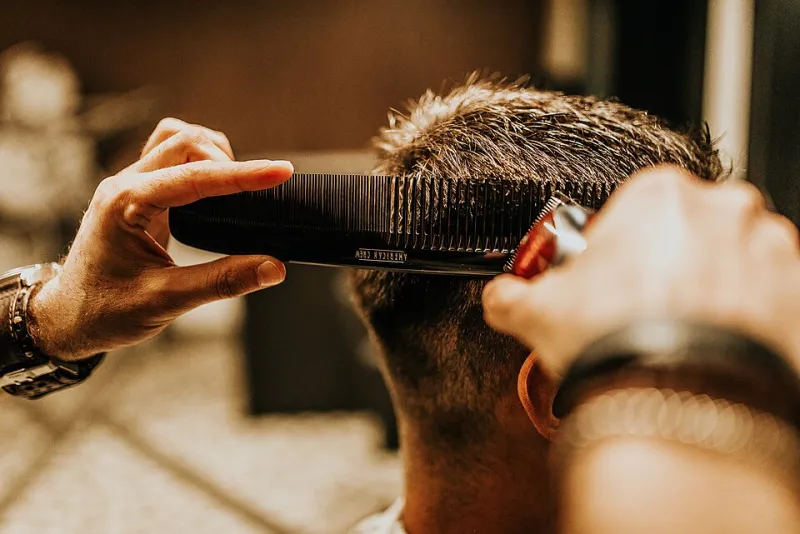
Photo: Nenad Stojkovic, CC BY 2.0, via Wikimedia Commons
The Barbershop Nobody Regulates
On a Saturday morning in East Cleveland, a man we will call Darnell cuts hair in the back of a shop that has never appeared on an inspection list. He is good — good enough that regulars ask for him by name. He is also, technically, unlicensed. Ohio's barbers board, like most state licensing bodies, treats a decades-old felony as a disqualifying character flaw. So Darnell works for cash, off the books, in the only economy that will have him.
His story is not an anomaly. It is the norm. Researchers estimate that roughly 60,000 occupational licensing restrictions nationwide carry collateral consequences tied to criminal records — restrictions that touch everything from cosmetology and construction to commercial driving and health care. And when the front door of the legal labor market slams shut, workers like Darnell do not simply stop earning. They move to where the law cannot see them.
The Shadow Labor Market
Sociologists call it the informal economy. The people living inside it call it survival. Church bulletin boards, barbershop word-of-mouth, cousin's contracting crews, cash gigs moving furniture or detailing cars — these networks form the de facto employment infrastructure for hundreds of thousands of people coming home from prison each year.
The consequences ripple outward. Informal work means no payroll taxes, no workers' compensation, no unemployment insurance, no path to a credit history or an apartment lease. It means injuries that never get reported and wages that never get counted. It means that when policymakers celebrate a falling unemployment rate among formerly incarcerated people, they may be measuring a statistical shadow, not a real recovery.
There is a bitter irony here. 'Ban the box' campaigns have scored genuine victories, removing conviction questions from public-sector applications in dozens of states and cities. But as formal hiring processes have been scrubbed clean, the discrimination itself has not disappeared. It has migrated — into licensing boards, into background-check vendors, into the quiet discretion of a county clerk deciding whether a paperwork packet is 'complete.' The hiring wall did not come down. It moved underground, and took its workers with it.
When the State Picks Winners and Losers
It is worth being precise about what an occupational license is: a government-issued permission slip to earn a living. Barbers, plumbers, truck drivers, nail technicians, funeral directors — in most states, practicing without the state's blessing is a crime. For a person with a record, that permission slip is often denied for offenses that have nothing to do with the trade in question. A decade-old drug conviction does not make a worse haircut. It does not make a weaker weld.
This is where the logic of the carceral state reveals its economic teeth. The same system that confines people then follows them out the gate and polices their access to a paycheck. And because licensing is state law, the fix is a state law — which is why three states have become the laboratories to watch.
Three States, One Structural Idea
Indiana pioneered the most direct approach: automatic expungement. Eligible records are sealed without the applicant ever filing a petition, removing the conviction data that licensing boards use to screen people out before they apply.
North Carolina enacted a framework allowing people to petition for a certificate of relief — an official declaration that a conviction does not bar them from occupational licensure, which boards must treat as presumptive evidence of fitness rather than grounds for denial.
Illinois took a different route, creating a process for courts to declare a person 'qualified' for a specific license, effectively shifting the burden of proof onto the state to justify exclusion rather than onto the worker to prove worthiness.
Each model is imperfect. Petition-based systems still require money, time, and legal literacy that many returning citizens do not have. But all three share a crucial premise: the state should not require a lawyer, a filing fee, and a judge's mercy to earn a paycheck. The premise should be restoration by default, exclusion only for demonstrated, occupation-related cause.
What Advocates Should Demand
The lesson for the reform movement is structural, not sentimental. Individual hustle is not a substitute for statutory change, and neither is a 'ban the box' ordinance that stops at the application form. Advocates should be pressing legislatures for three things:
- Automatic restoration of licenses and record-sealing wherever eligibility criteria are met, removing the petition burden entirely;
- Relevance standards requiring licensing boards to connect any denial to a concrete, occupation-specific risk — not to moral character in the abstract;
- Sunset reviews of every licensing board's criminal-history provisions, with a presumption that they expire unless justified with evidence.
Darnell, back in that East Cleveland shop, has no opinion on statutory frameworks. He has an opinion on work. He wants to cut hair in the open, pay taxes, and stop flinching when a customer asks for a receipt.
That is not too much to ask of a democracy. It is, however, more than most states currently offer. Until licensing laws change, the underground economy of reentry will keep growing — not because people prefer the shadows, but because the law built the shadows and locked the door behind them.